


After four months of learning and growth, the participants of Kahiu Academy Batch 3 finally completed their journey.
The graduation moment celebrated in Kahiu's Farewell event became an important symbol of a transformation—from a dropout teenager to a more confident, skilled and prepared individual for the challenges of the future.
This Program is not just a training, but a safe space to explore potential, build character, and find new hope.
Check out their journey at Kahiu Academy and how this program has paved the way to a brighter future!
Since it was first established in 2022, Kahiu Academy has become a light of hope for teenagers dropping out of school in West Kalimantan.
The Program is designed to provide comprehensive education and training, with the aim of equipping participants with technical and non-technical skills so that they can become more independent and empowered individuals.
Kahiu Academy takes a holistic approach. Not only does it focus on improving knowledge and practical skills, the program also instills important values such as concern for the environment and character development.
Thus, each participant not only gets provisions for the world of work or independent business, but also grows into a person who has social awareness and responsibility to the community and the surrounding nature.
Over the past four months, as many as 14 participants from four districts in West Kalimantan participated in an intensive training program held at the Sir Michael Uren YIARI Ketapang Learning Center.
They undergo a dense learning process, covering more than 40 materials divided into two main categories: technical skills (hard skills) and self-development (soft skills).

All materials provided are not only aimed at forming individual competencies, but also to foster the spirit of contributing to society and the environment.
Through this approach, participants are invited to learn for the sake of their own future, while being encouraged to be part of a broader change in their respective communities.
During the program, Kahiu Academy Batch 3 participants receive various trainings designed to equip them with practical skills as a preparation for the future. The material presented includes:
More than just theory in the classroom, participants also get the opportunity to apply their knowledge directly through practice. This practice-based approach helps participants understand the real context of the skills learned, while strengthening their understanding in real-world situations.
After a long journey full of challenges and learning process, Kahiu Academy Batch 3 participants finally successfully completed their program.
This graduation moment was celebrated in the Farewell Kahiu event, a celebration full of meaning and emotion. Not only a farewell event, this event also became a symbol of success and extraordinary achievements, both for the participants, mentors, mentors, and all parties involved in this program.

In the event, each participant was given the opportunity to share stories and reflections about their journey during the training.
They tell of the changes they have experienced, how the program has changed the way they see the future, and how the skills they have acquired have fostered the confidence to go further.

Not only that, the participants also presented their plans after graduation. There are those who want to pursue their professional goals, there are those who plan to hold empowerment activities in their hometown, and there are those who aspire to develop sustainable agriculture.
The variety of ideas and initiatives presented by them shows that this program has opened their horizons and equipped them with real abilities to build a better future.
The enthusiasm and enthusiasm of the participants in welcoming life after graduation was felt throughout the farewell event. With the provision they have gained during the program at Kahiu Academy, graduates are now more confident to face various challenges, as well as create new opportunities for themselves and the communities in which they live.
Graduation from Kahiu Academy is not the end, but rather the beginning of new, hopeful steps. The participants now have broader skills and insights—both to work in various sectors and to build independent businesses. More than that, they are also equipped with the spirit to make a real contribution to the environment and society.
We hope that this program continues to grow and reach more teenagers in West Kalimantan. The success of Kahiu Academy graduates is a clear proof that proper education and training can pave the way to a brighter future.
Thank you to everyone who has contributed to supporting this journey—mentors, facilitators, partners, and all program supporters. May the graduates of Kahiu Academy continue to move forward, achieve their dreams, and bring positive change to their communities.
Food security is one of the main pillars in realizing the welfare of the community, especially for local communities that rely heavily on natural resources in the vicinity.
In the face of global challenges such as climate change, environmental degradation, and dependence on food supplies from outside the region, the development of self-managed Food Systems is an effective and sustainable solution.
As a form of commitment to strengthening local food security, Yayasan Initiasi Alam Rehabilitasi Indonesia (YIARI) actively encourages environmentally friendly tilapia farming practices. Through the tilapia harvesting program, YIARI supports the sustainable increase of fish production, as well as providing education to the community on efficient cultivation techniques, saving resources, and in line with conservation principles.
This article will discuss in depth about the tilapia harvesting program implemented by YIARI. Check it out!

On Friday, February 28, 2025, YIARI and the Alam Lestari Joint Venture Group (KUB) carried out tilapia harvesting in Ulak Medang Village, Ketapang regency, West Kalimantan. This activity is part of a sustainable aquaculture program designed to strengthen local food security through a community-based approach.
Ulak Medang village was chosen as the location of the program because it has the potential to support water resources, as well as high community spirit to develop independent cultivation. Active citizen involvement is key in every stage of the activity—from pond management, feeding, to harvesting.
Through this activity, YIARI not only channeled technical knowledge and assistance, but also instilled conservation values in cultivation practices to stay in line with environmental conservation efforts.
Tilapia harvest conducted in the village of Ulak Medang yielded encouraging results. In one harvest, the community managed to harvest 409 kilograms of tilapia. This achievement not only shows the success in terms of quantity, but also the quality of cultivation management.
During the cultivation process, fish mortality rate (mortality) was recorded at 20%, while the value of food conversion ratio (FCR) reached 1.25. This FCR number indicates good efficiency in the use of feed—the lower the FCR value, the more efficient the fish are in converting feed into body mass.
This success certainly cannot be separated from the implementation of environmentally friendly cultivation practices. Since its inception, the program has been designed with a conservative approach to maintaining the health of Fish and the quality of aquatic ecosystems. Some of the main principles applied include:
Behind the success of tilapia farming, there are a number of significant challenges faced by farmers in the field. Some of the following major obstacles are of serious concern in the management of sustainable cultivation.
Here are the challenges and solutions that have been pursued by YIARI together with the Joint Venture Group (KUB) Alam Lestari:

The selling price of tilapia in the market tends to be unstable because it is influenced by various factors, such as fluctuations in consumer demand, harvest season, and general economic conditions.
Based on data from the Central Statistics Agency (BPS) in 2022, the price of freshwater fish—including tilapia—can change between 10% to 20% in a matter of months, depending on stock dynamics and market demand.
This price instability has a direct impact on the income of farmers, who often have to sell crops at prices below production costs. To overcome this challenge, we together with Kub Alam Lestari took the initiative to build a wider and more stable marketing network.
One of the strategic steps taken is to establish direct partnerships with regular buyers, such as traditional markets and cooperatives. Through this approach, farmers can reduce dependence on open markets and ensure a more secure revenue stream.
Feed is the largest cost component in Tilapia farming, which according to a report by the Ministry of Marine Affairs and Fisheries (MMAF), can reach 60-70% of total operating costs.
In recent years, commercial feed prices have continued to rise, driven by the high cost of raw materials such as fishmeal and soybeans, most of which are still imported.
This increase is very burdensome cultivation actors, especially small and medium scale. To reduce dependence on commercial feed, we started developing locally based solutions through alternative feed production.
Ingredients such as lamtoro leaves, rice bran, and maggot (BSF fly larvae) which are rich in protein are the main choices. This approach not only helps reduce operational costs, but also supports more environmentally friendly cultivation practices by utilizing easily accessible local resources.
Cultivation in a group scheme requires solid coordination and communication between members. Each individual must apply the same cultivation standards, from water quality management, feeding, to harvest scheduling.
In practice, however, differences in experience, technical understanding and way of working are often a source of imbalance.
To strengthen synergies within the group, we actively encourage information disclosure and conduct regular joint training. In addition, regular discussion forums are also facilitated to provide space for members to share experiences, discuss technical challenges, and find solutions together.
Effective communication is proven to increase production efficiency and help reduce potential conflicts in collective business management.

For the people of Ulak Medang village, harvesting tilapia is not just an economic activity, but a reflection of changes in a more sustainable way of life. This Program has a real impact, both in terms of family income and environmental awareness.
One of the members of KUB Alam Lestari, Kusmaheru, shared his experience:
“In harvesting tilapia this time, my cage produces 100 kg of fish which is immediately sold out. Before joining this program, I worked as a woodcutter. Yes, my intention is actually to change from woodworking, and I live a business with this KUB too, I see first the situation and how the results are. If it does produce, the next good step I will stop working on wood.”
Kusmaheru's story is proof that tilapia farming can be a way out of dependence on activities that have the potential to damage forests. In addition to generating economic benefits, this activity also encourages social transformation that is more environmentally friendly.
Not only that, the success of the harvest also opens up new opportunities for other family members to get involved, ranging from crop processing to distribution to the local market. In the long run, this strengthens the resilience of families and extends the benefits of the program to a wider stratum of society.
Tilapia cultivation developed in Ulak Medang village shows that food security and environmental conservation can go hand in hand. Through a community-based approach, the program not only produces successful harvests, but also fosters a new awareness of the importance of maintaining the balance of nature.
In the future, this activity is expected to be an inspiring model for other villages that want to develop an independent food system. Tilapia farming is not only about meeting the needs of the kitchen, but also about keeping the forest sustainable, reducing pressure on nature, and strengthening people's independence.
Because in the end, planting hope means reaping the future.
Lying weak in the action room, a male Javanese slow loris named Shuri seemed to calm down under the influence of anesthesia.
But despite the calm, his body was struggling with a serious condition—two fairly large stones lodged in his bladder. Such stones, if not treated immediately, can provoke dangerous complications that threaten his safety.
Shuri is not a young sloth. He is among the elderly slow loris individuals who are under care at the Indonesian rehabilitation nature initiation Foundation (YIARI). In a routine X-Ray examination, there were two stones in Shuri's bladder. This condition requires immediate medical action through a cystotomy surgical procedure, which is surgery to remove stones from the bladder.
Then, where did the stone inside Shuri's bladder actually come from? Come on, check out the further explanation below!
To deal with Shuri's condition, YIARI's medical team performed a cystotomy, a surgical procedure performed to remove stones from the bladder.
This surgery is also common in other animals—even humans—when bladder stones are already large and cannot be removed naturally.
According to drh. Imam Arifin, a veterinarian who handles Shuri directly, cystotomy becomes the only best option in this case.
“Cystotomy surgery means bladder surgery on Loris. The goal is to take the stone, because in Shuri's bladder two large stones have formed,' he explained.

If they are not removed immediately, the stones can disrupt the voiding process, cause pain, and in the long term provoke infections up to organ damage.
“If left unchecked, more serious complications can arise. That is why fast and precise action is needed,' added Imam.
Cystotomy surgery is not done carelessly. This procedure requires careful preparation because Loris include animals that are very sensitive to stress. Even a slight overpressure can drastically affect their physiological condition.
Therefore, before the surgery is performed, the medical team must ensure that Shuri is stable and strong enough to undergo anesthesia as well as surgery.
After being confirmed to be in stable condition, Shuri is scheduled to undergo surgery on January 16, 2025. Despite his no longer young age, this male slow loris showed a fairly good body response ahead of the procedure.
That morning, the action room at the yiari facility was specially prepared. All sterile instruments, anesthetic drugs, and veterinary medical support have been prepared. Shuri was carefully positioned, and the process of total anesthesia was carried out so that she did not feel pain during the operation.
“During the operation, Shuri seemed to be sleeping peacefully. This is very important to avoid excess stress, because Loris are very sensitive to pain and pressure,” explains drh. Priest.
Surgery is performed directly by drh. Imam Arifin, assisted by several other medical personnel. The operation went smoothly, two stones were successfully removed from Shuri's bladder. The stones have a flattened shape and are white, exactly as the previous X-Ray showed.
The size of the stone is quite large when compared to the size of Shuri's body. This further confirms the existence of the Stone has the potential to seriously disrupt the urinary system if not immediately addressed.
“The operation went well. Two stones that settled in the bladder were successfully removed completely without complications. We are relieved to see the results, ' said Imam.
After the operation is completed, Shuri is transferred to the recovery room. In the first few hours, the medical team continuously monitors his vital signs: heart rate, body temperature and respiratory response. All are within normal limits.
Although still in a weak condition, Shuri's response shows her body is starting to adjust to the postoperative recovery process.
The appearance of stones in the bladder is not something that happens suddenly. There are a number of factors that can generally trigger the formation of such stones in animals, including Loris. According to drh. Imam Arifin, these factors include:

Shuri, as an old male Loris, is likely to experience a natural decline in organ function. This can affect the excretory system, including the quality and pH balance of urine.
However, the priest stated that it could not be ascertained specifically the dominant factor causing the formation of stones on Shuri.
“The factors are many. It can be due to food, it can also be due to a changed urine pH. But in Shuri's case, we haven't been able to determine the exact cause. Further urine analysis we will do”' said Imam.
To ascertain the root of the problem, YIARI's medical team will perform a urinalysis to check the composition of Shuri's urine, including mineral levels, pH, and potential for infection.
The results of this examination will be very important to determine future preventive measures, not only for Shuri, but also other lorises that are in the rehabilitation program.
Regarding possible food factors, Imam explained that the loris feed in YIARI has been adapted as close as possible to their natural food in the wild. The feeding of fruits, small insects and foliage is ensured in the right portions and frequency.
“Our feed has been arranged to follow their diet in nature. But to be sure, we will still re-evaluate and adjust if necessary,” he added.
Handling wildlife in critical condition is not an easy task, especially when medical procedures involve surgery such as cystotomy surgery.
Although Shuri is not the first case encountered, any medical action still requires high physical and mental readiness from the veterinary team.

drh. Imam Arifin revealed that the operation on Shuri was the third case of cystotomy on Loris that he had handled with YIARI's team in recent years.
“This is not the first experience, but each case must have its own challenges. Moreover, Loris are primates that are very sensitive to stress. That makes the handling must be extra careful, ' explained Imam.
He recalled the first time he performed a cystotomy on a slow loris several years ago. At that time, Imam admitted that he had doubts because of the lack of references and experience in the practice of similar operations on animals with unique characteristics such as Loris. But after the first successful operation, his confidence increased, and the medical approach was refined over time.
“The first time, Honestly I was tense. But we learned a lot from that experience. Now, we're better prepared, more structured. But still, one must be vigilant-because the risk remains great, ' he added.
One of the biggest challenges in this surgery is maintaining the physiological stability of the loris during the procedure. Loris can experience a sudden drop if stressed, even just because of noise or changes in room temperature. Therefore, YIARI always ensures that the operating room is quiet, sterile, and the team works with neat coordination and minimal distraction.
The priest also stressed that although the stones removed from the bladder look small, the impact can be enormous on health. If not treated immediately, the stone can provoke serious infections, inflammation and organ damage that is difficult to recover from.
Shuri's story is a true reflection of YIARI's relentless commitment to the welfare of wildlife, especially those in rehabilitation. Each individual treated animal, including Loris such as Shuri, receives attention and thorough treatment, from early detection of the disease to advanced medical procedures.
Shuri's experience is a reminder that animal health needs to be monitored regularly, especially for the elderly. Not only that, this story also opens a wider discussion space about the importance of advanced research, community education, and cross-party collaboration in maintaining the preservation and welfare of Indonesia's wildlife.
Featured image: Shuri, kukang jawa jantan lansia yang harus menjalani operasi sistotomi (Rendi Afandi | YIARI)
Editor: Hasna Latifatunnisa
At the beginning of Raja Juli Antoni's tenure as forestry minister, the West Kalimantan Natural Resources Conservation Agency (BKSDA) together with the Bukit Baka Bukit Raya National Park Agency (BTNBBBR) and the Indonesian rehabilitation nature initiation Foundation (YIARI) released 7 (seven) orangutans in the Bukit Baka National Park working area Mentatai Resort, National Park Management Section I Nanga Pinoh Region (31/10)
They are orangutans who were taken care of by the West Kalimantan KSDA Center at the Yiari Ketapang Orangutan Rescue and Rehabilitation Center from 2010 to 2020. All are orangutans rescued from illegal rearing of protected wildlife. Prior to their release, they underwent rehabilitation at the orangutan Rehabilitation Center in YIARI in Sungai Awan Village, Ketapang.
This rehabilitation process is intended to restore their natural properties, as well as make them have the ability to survive in the original habitat. Orangutans should live with their mothers from birth until the age of 6-8 years. During this nurturing period, orangutans need to learn various life skills such as climbing, foraging, and nest building. However, due to various reasons, this baby orangutan was separated from its mother and ended up in the hands of humans, thus losing the opportunity to learn all these abilities. The rehabilitation process until this release can take time and cost a lot. The time required can reach 14 years, depending on the ability of each individual.
Orangutan release is an important step after rehabilitation, as an effort to preserve protected wildlife and restore orangutan populations in nature. Of the seven orangutans released, two orangutans named Rika and Kamila are female. While Aben, Muaro, Onyo, Batis, and Lambai are male. The special thing about this release is that four of the seven orangutans are mother and daughter pairs. They are Kamila-Batis and Rika-Aben.

Rika is a female orangutan from Batu tangis Village, tumbang Titi Sub-District, Ketapang regency, West Kalimantan. He was rescued from the illegal trade and maintenance of protected wildlife by the WRU BKSDA of West Kalimantan and YIARI on October 28, 2013. The caretaker claimed to have obtained Rika from his son who bought the orangutan from a hunter for Rp500, 000. For three months of being kept, Rika was tied with chains under the house and fed rice and vegetables.
Yiari Animal Management Manager, Andini Nurillah, stated that during her ten years of study at the yiari Rehabilitation Center, Rika has made significant progress in mastering her survival skills as an orangutan. 'Not only mastering the ability to survive as an orangutan, Rika has also proven to be able to teach this ability to other orangutans, and can even become a qualified foster mother for baby orangutans,” said Andini.
Meanwhile, Aben, a male orangutan who was rescued from a wildlife case in Ketapang on December 10, 2019, became the lucky baby orangutan who did not need to undergo a long rehabilitation period like Rika. Rika is paired with Aben to become a foster mother. As a result, Rika can teach Aben with various abilities necessary for survival such as climbing, foraging, and making nests. Rika can also be a protector for Aben who is petite. This strategy worked. Rika becomes a protective mother and Aben becomes more confident to learn new things.
Other orangutan success stories come from Karmila and Batis. Karmila is a female orangutan from Kayong continent, Ketapang, West Kalimantan. He was rescued from a case of illegal maintenance of wildlife from a resident who claimed to get Karmila from an oil palm plantation in the area. Andini emphasized that during the 14 years in YIARI, Karmila has undergone an intensive rehabilitation process and has shown remarkable development. 'He became an orangutan who is adept at finding food, making nests, and has other essential survival skills in the wild,” he said. On November 19, 2020, Karmila began to be socialized as a foster mother for a baby orangutan named Batis. During the period of socialization, Karmila was able to adapt well, showed strong maternal abilities, and managed to become a reliable foster parent. Currently, Karmila who is estimated to be around 15 years old is ready to be released with her foster child, Batis.

Batis is a male orangutan from Batu Lapis Village, Hulu Sungai Sub-District, Ketapang regency, West Kalimantan. He was rescued on April 17, 2020 from a case of illegal animal maintenance protected. Previously, Batis was found by a resident in the forest while collecting wood and did not realize the orangutan was a protected animal. For three months kept, Batis placed in a wooden cage measuring 50 x 80 cm and fed rice, bananas, papaya, and drink water and even coffee. When rescued, Batis was estimated to be about 1 year old. After undergoing quarantine, he began to be socialized with Karmila, his foster mother, on November 19, 2020. Through this socialization, Batis learned various survival skills, such as foraging, traveling, dan membuat sarang. During four years of rehabilitation, his health condition was well monitored and he was ready to be released with his foster mother, Karmila.
Muaro is a male orangutan from Kubu Raya regency, West Kalimantan, who arrived in YIARI on February 11, 2018. His story began when he was separated from his mother due to land clearing by an oil palm plantation company in December 2016. During that time, Muaro was kept by a villager and given human food such as milk, sugar water, rice, and side dishes. The rescue of Muaro was carried out by a joint team of WRU BKSDA West Kalimantan and YIARI on February 9, 2018. After six years of rehabilitation, Muaro, who is now eight years old, has demonstrated his ability to live wild in his natural habitat.
Onyo is a male orangutan from Nek Doyan, Ketapang. He first arrived at Yayasan Initiasi Alam Rehabilitasi Indonesia (YIARI) on March 10, 2013, after being found by a resident under a tree. Based on the narrative of residents, Onyo's mother was seen around the location, but then went away leaving Onyo alone. During the maintenance period before being handed over to YIARI, Onyo was fed rice and sweetened condensed milk by local residents. After eleven years of rehabilitation in YIARI, Onyo, who is currently estimated to be 12 years old, is considered worthy of being released.

Lambai is a male orangutan from Tanjung Lambai Hamlet, Nanga Tayap District, West Kalimantan. He arrived at Yayasan Initiasi Alam Rehabilitasi Indonesia (YIARI) after being rescued by a joint team of WRU BKSDA West Kalimantan and YIARI on April 30, 2016. The story of his rescue began when an employee of an oil palm plantation company found Lambai in a cardboard box that had fallen from a car. After undergoing a rehabilitation process for 8 years, Lambai, who is currently 10 years old, is considered ready to be released into his native habitat.
This rehabilitation is necessary to restore the natural nature and ability of orangutans to survive in their habitat. In the wild, baby orangutans will stay with their mother until the age of 7-8 years. He learned from his mother about surviving in nature as an orangutan. As the baby orangutans were forced to separate from their mothers to be used as pets, they lost the opportunity to master their survival skills.
The journey to the release point takes 3 days, from the Yiari Rehabilitation Center in Sungai Awan, Ketapang to the release point in the TNBBBR area. The release team departed from the Yiari Rehabilitation Center in Ketapang on October 29, 2024 at 04.00 WIB. During the trip, the team always pay attention to the condition of the orangutans brought so as not to experience stress in the cage, considering the long distance. It took at least 17 hours for the team to reach the Bukit Baka Bukit Raya National Park section office in Nanga Pinoh. The team rested one night before proceeding to the release point. This release activity involved more than 100 people consisting of the community, West Kalimantan BKSDA, BTNBBBR, and the YIARI team itself.

The next morning, the journey continued to the nearest Hamlet to the TNBBBR area. The road trip is taken for 5 hours, then continued by motor boat for 1 hour. Not getting there, the journey continues on foot into the forest area TNBBBR.
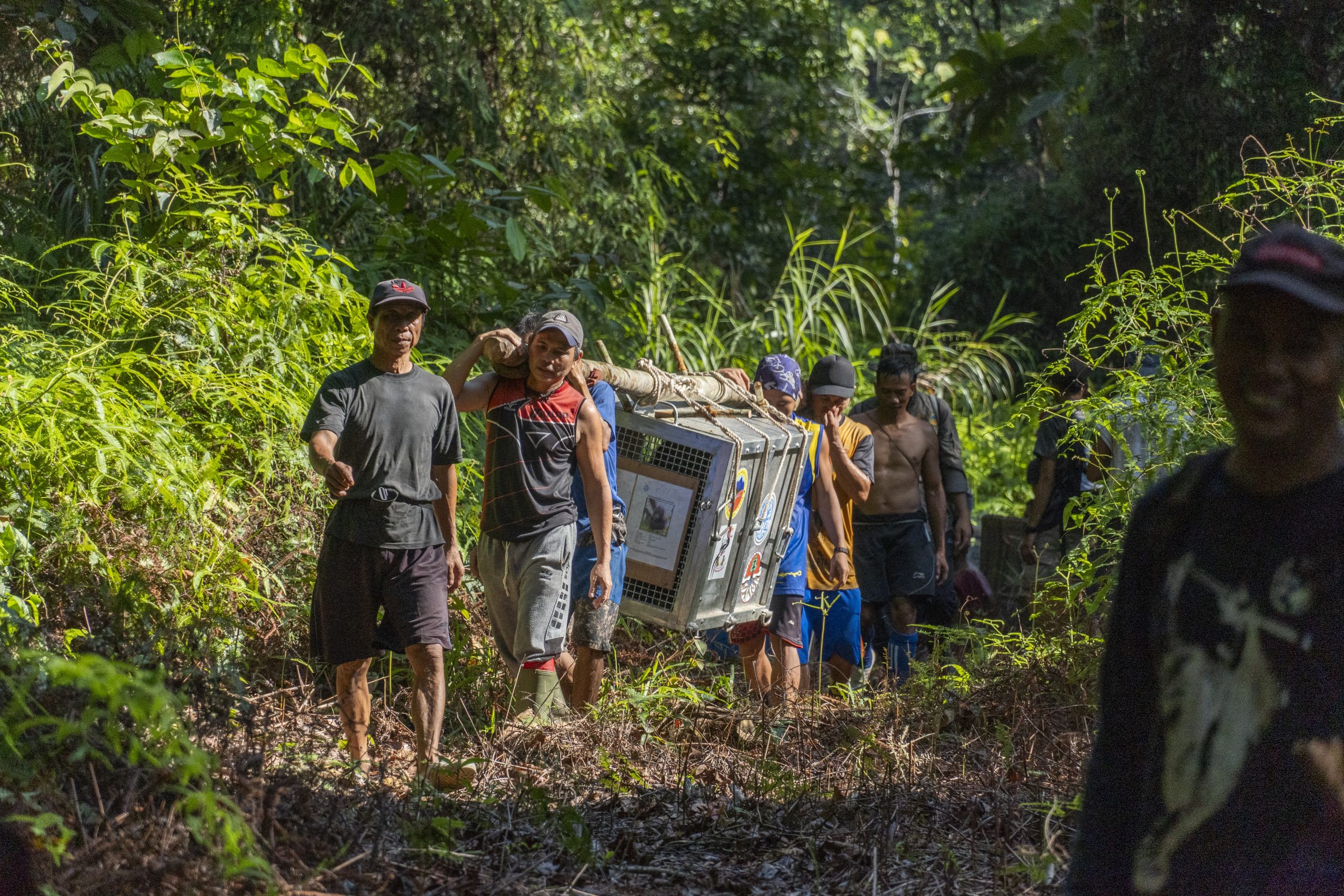
Supported by porters who come from villagers around TNBBBR, the journey by carrying this cage takes up to 5 hours. Afterwards, the four orangutans were placed in a habituation cage so that they could rest and adapt a bit to the new environment. The next day, the team continued on foot and the seven orangutans were released at two different release points.
Bukit Baka Bukit Raya National Park was chosen as the orangutan release site because the habitat provides abundant food sources and is suitable for orangutan habitat as well as proof that the habitat in TNBBBR is still safe and protected the survey results of the btnbbbr and YIARI joint team showed the number and type of orangutan feed trees were abundant. In addition, the number of orangutan populations in the area is still very small. The Status of the TNBBBR area as a conservation area further ensures the safety and welfare of the animals in it. To date, YIARI has released 82 orangutans since 2016.
Considering that the released orangutan is a rehabilitated orangutan, YIARI and BTNBBBR deployed a monitoring team to monitor the behavior and adaptation process of this orangutan in its new environment. The monitoring team consisting of the people of the buffer villages of the TNBBBR area will record the behavior of orangutans every 2 minutes, from waking up to going to sleep again every day. The monitoring process lasts for 1-2 years, ensuring that released orangutans can survive and adapt to their new environment.

Chairman of YIARI, Silverius Oscar Unggul appreciated this joint effort as a good start in the leadership of the new Minister of Forestry. 'Hopefully this release activity will be a good first step at the beginning of the leadership of our Minister of Forestry, Mr. Raja Juli Antoni.” He also emphasized that this is a real effort from the collaboration of Wildlife Conservation in Indonesia. “I am proud to be part of a team that gives new life to orangutans who previously needed to be rescued and have undergone rehabilitation. The release of these seven orangutans is a clear proof of our shared commitment to the conservation of Indonesia's protected wildlife. This success cannot be separated from the solid cooperation between YIARI, West Kalimantan KSDA Hall, and Bukit Baka Bukit Raya National Park Hall. Each individual orangutan we release has gone through a long and thorough rehabilitation process, which aims to ensure that they have the skills to survive in their natural habitat. We hope this step can strengthen the orangutan population in West Kalimantan and support the preservation of the forest that is their home,' he concluded.
The head of BTNBBBR, Andi Muhammad Kadhafi, stressed that this success is the result of strong collaboration between various parties. TNBBBR was chosen as the release site because it provides an abundant source of food and is suitable for orangutan habitat.
Head of BKSDA West Kalimantan, RM Wiwied Widodo, revealed the importance of preserving Kalimantan's endemic wildlife. He stressed that orangutans are part of Indonesia's rich biodiversity, which must be preserved and preserved. Support from all parties is essential to ensure the survival of this species.
About YIARI
Yayasan Initiasi Alam Rehabilitasi Indonesia (YIARI) is a non-profit organization engaged in primate conservation in Indonesia based on rescue, recovery, release, and post-release monitoring efforts. YIARI is also committed to provide protection of primates and their habitats with a holistic approach through multi-stakeholder cooperation to realize a harmonious ecosystem between habitats, animals, and humans.
For more information, please contact:
Yiari: +62 821-5346-2720 (Heribertus Suciadi, media and Communication Manager of YIARI)
In the midst of the dark shadow of the depletion of forest resources, a new glimmer of hope appears in Batu Lapis Village.
Deli, a village youth who used to live from chopping wood, has now found another way to survive—through coffee beans. This small step he took slowly changed not only his life, but also the future of his village.
Moses, a father of three, often pondered the future of his offspring. He is aware that natural resources in the forest are depleting.
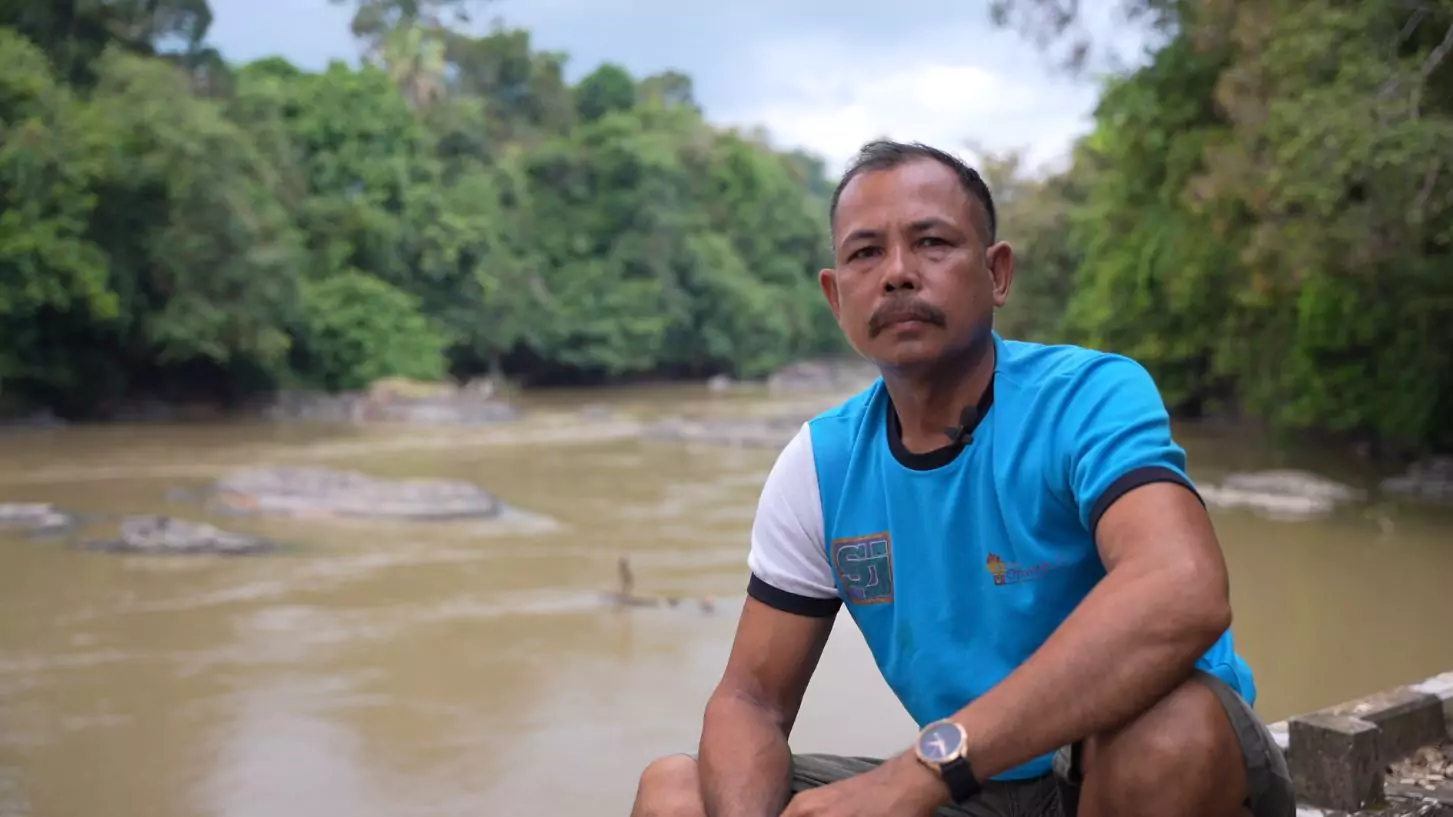
'Maybe our generation can still survive, but what about our grandchildren?'he said while talking on the terrace of his house.
For decades, Moses has worked as a woodcutter in the forests of Borneo. As part of the Dayak tribe, Moses depended on forest products for his livelihood.
Farming and cutting Ironwood is the main occupation of the majority of residents in Batu Lapis Village, Ketapang regency, West Kalimantan. In the last two decades, this work has indeed advanced the village. The economic condition of the community is getting better.
'The houses here used to be small, but now they are bigger, and we can build roads to make transportationeasier,' Moses said.
However, he realized that dependence on logging could not be relied upon forever. Increasingly stringent government regulations related to logging are becoming a pressure for villagers.
'We certainly want to find other jobs that are safer and no longer destroy the forest,' Moses said Hopefully.
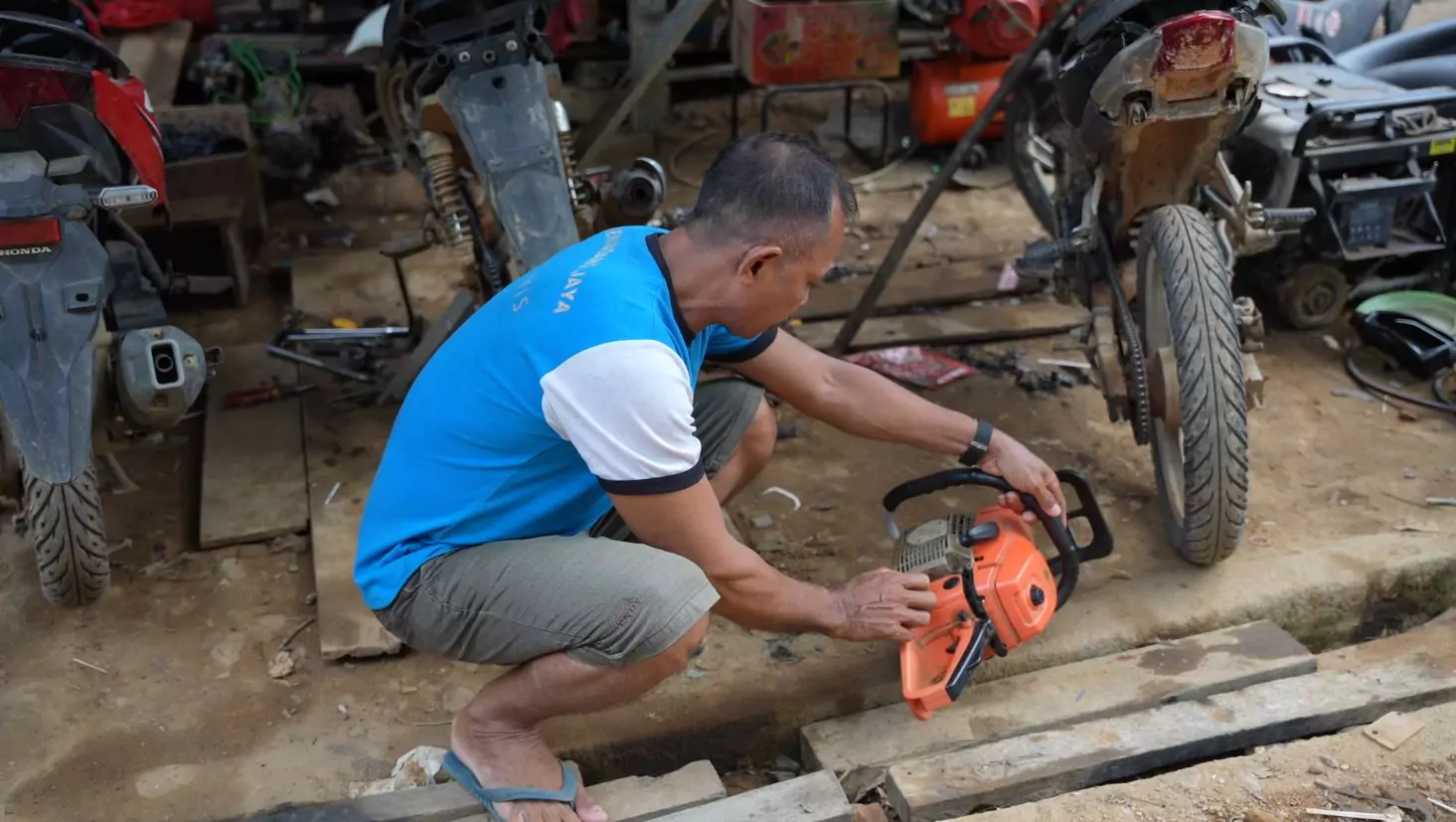
Hope is now starting to appear, thanks to the efforts of two young people from Batu Lapis Village, Deli and Clarisa.
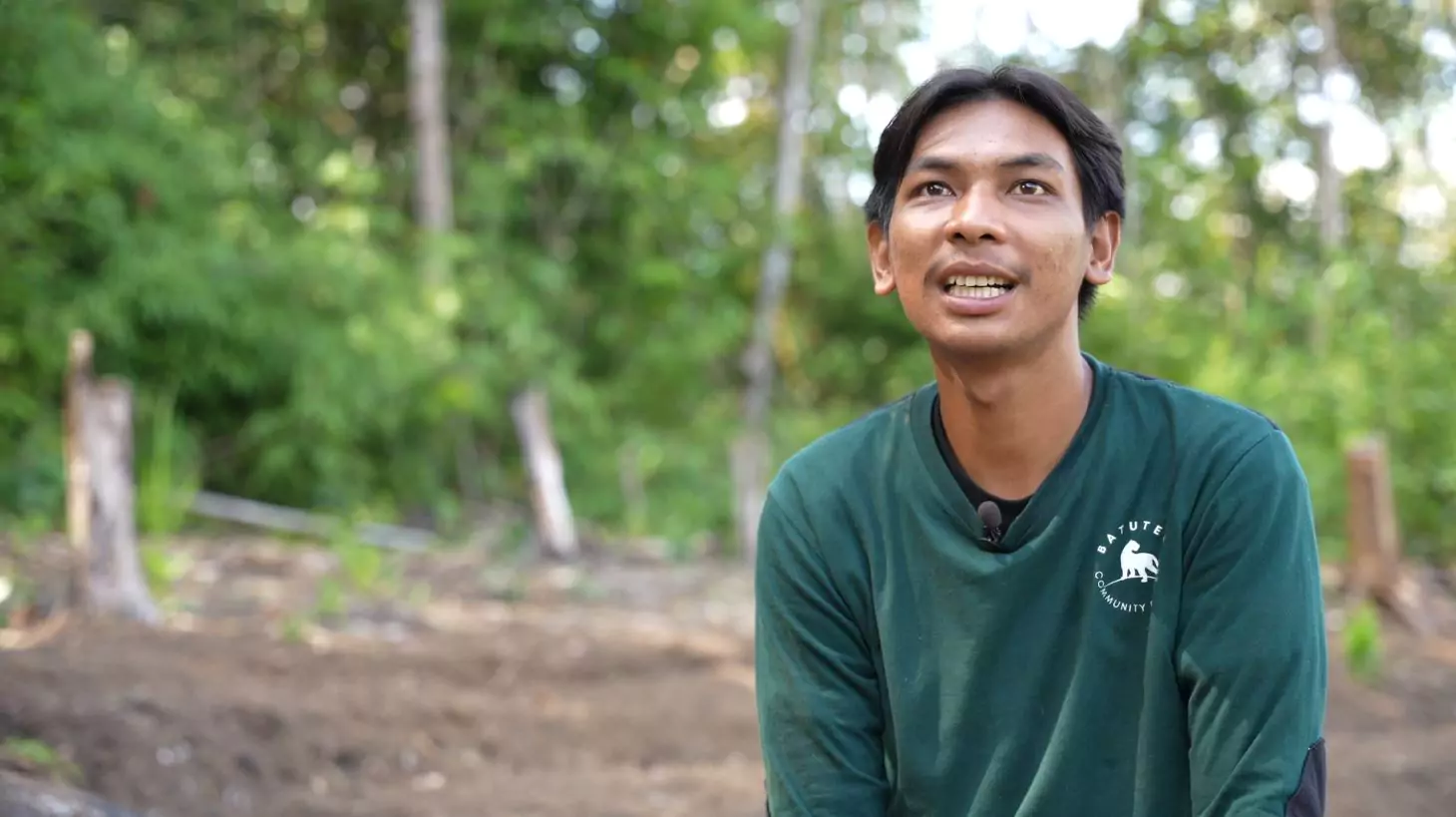
They are graduates of Kahiu Academy–a mentoring program for school dropouts initiated by Yayasan Initiasi Alam Rehabilitasi Indonesia (YIARI). After the training, Deli and Clarisa were accompanied to develop independent businesses, such as teaching children or farming.
'If there is education for children, as well as training and mentoring for residents, such as in farming, this can be a hope for us in the future,' Moses said with an optimistic smile.
One morning, a wooden boat drove over the Biha River receding due to drought.
On it, Deli with a companion from YIARI sat preparing to go to the field.
Arriving at the farm, Deli immediately prepare equipment for gardening. He walked along the path to his field, where he had prepared ten beds of plants.
In the middle of the field, stands a seedling house with a black tarpaulin that shades the leaves of coffee seedlings that are starting to grow. With care, Deli watered the plants that would become the forerunner of the first coffee plantation in Batu Lapis Village.
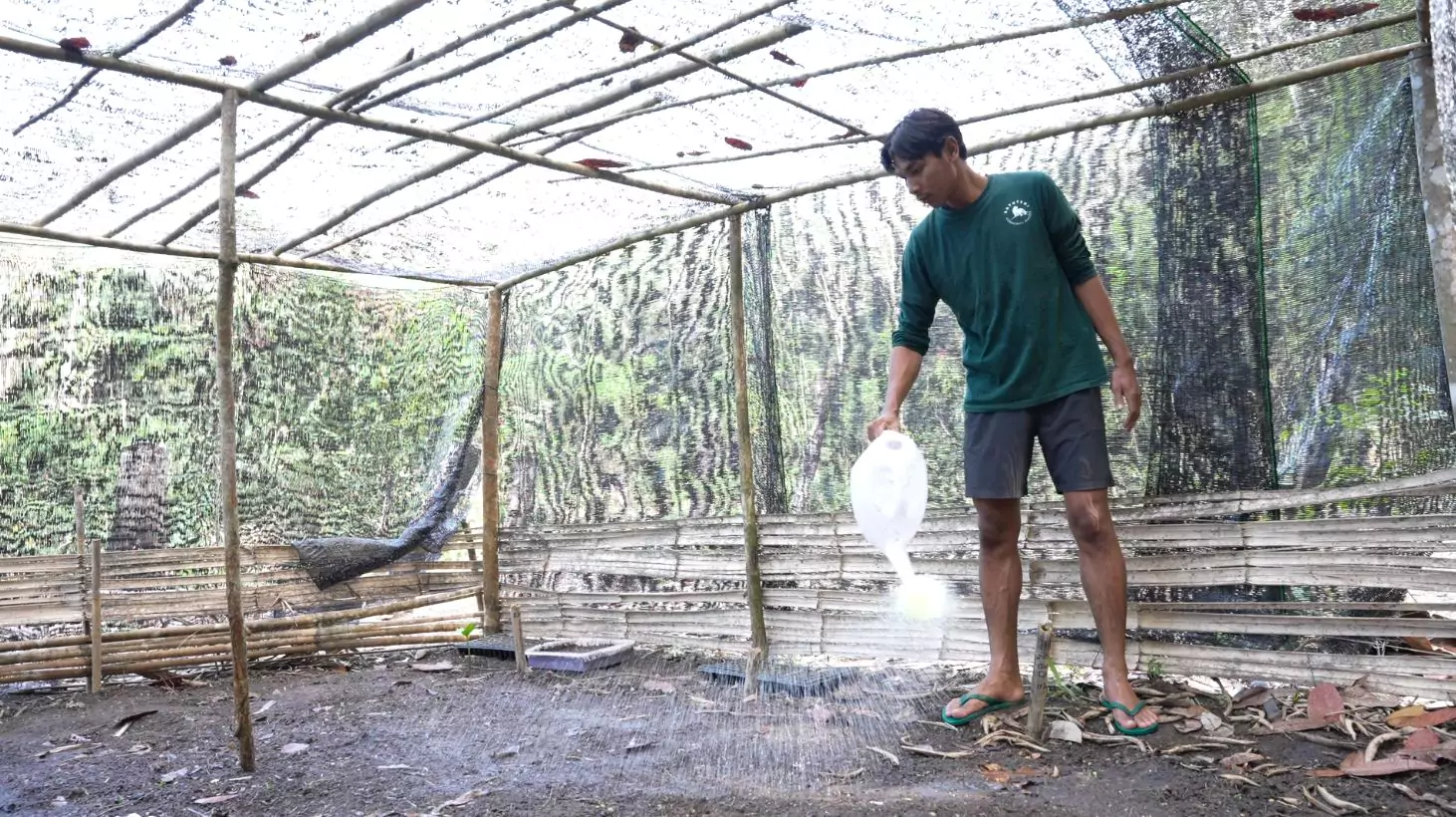
Before his foray into agriculture, he worked as a woodcutter and animal hunter. 'I used to cut wood and hunt, but I realized that this job was not suitable for me,' he says.
Meeting with Kahiu Academy changed his life. He was interested in the agricultural science taught in the program and attended training for four months in Ketapang.
After graduation, Deli was sent to Lampung to learn more about coffee cultivation, including seeding techniques, seedlings, and planting.
The choice of coffee as the main crop is not without reason.
'In Batu Lapis Village, most people plant oil palm whose storage only lasts 2 days at most. While the coffee beans can be stored longer, dried and stored for months,” said Deli.
In addition, the coffee I can send to the city by motor, so this is more practical for me,' he added. This is a more effective solution for delis that still do not have large vehicles for transportation of agricultural products.
For Deli, coffee plantations are a new hope. The support of his family and friends strengthened his resolve.
'I hope this effort can inspire other people. If many follow, people's lives can be better, the village economy increases, and the environment is protected from forest destruction,' he said excitedly.
Dieka, Kahiu Academy's program manager, took part in reviewing Deli and Clarisa's progress.
'Kahiu Academy is intended for school dropouts so that they have skills and can be independent,' explained Dieka.
The programme is for young people aged 17-25, with four months of intensive training covering a range of subjects, from agriculture to gender equality.
'We hope the participants can practice the knowledge they get for themselves and their communities,' Dieka added.
With 48 materials provided during the training, Dieka hopes that there will be more “Deli” and “Clarisa” who can practice their knowledge for the good of themselves and the community.
Happy International Makaka Day, #KonservasYIARI Friends! March 16 is celebrated International Makaka day. makaka Day is celebrated for the first time on March 16, 2016, which is motivated by love and efforts to preserve makaka around the world.
Macaque is a genus of primates found in the world. Its populations can be found ranging from Morocco, Algeria, Afghanistan, China, Japan, and Southeast Asia (Napier and Napier 1985), many also yes , man! In Indonesia, the genus Makaka also has a wide distribution level, especially on the islands of Java, Sumatra, Kalimantan, Sulawesi to the islands in Nusa Tenggara. Types of macaca that can be found in Indonesia include Macaca nemestrina, M. siberu, M. pagensis, M. nigra, M. nigrescens, M. tonkeana, M. ochreata, M. hecki, M. maura, M. fascicularis (Ruskhanidar et al. 2017).
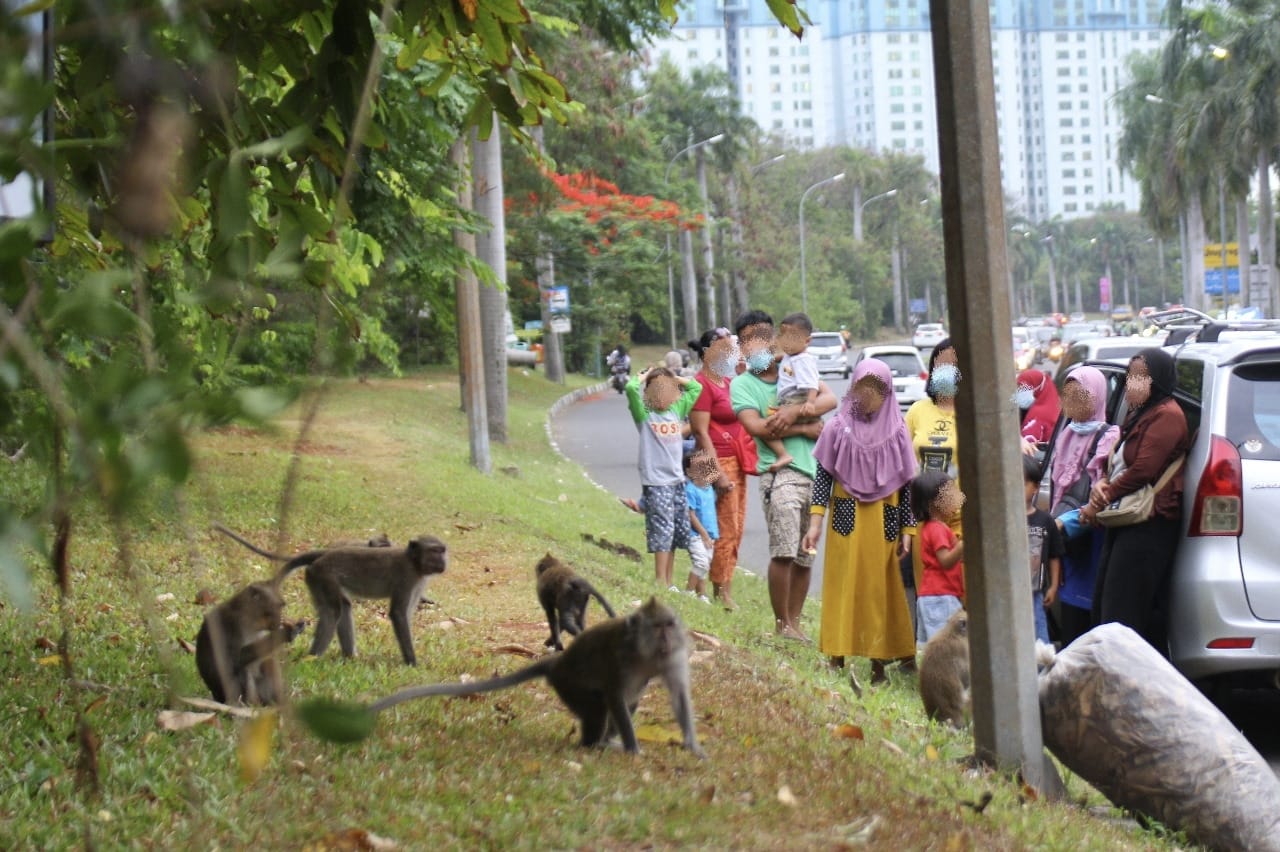
makaka is one genus that has a fairly good level of adaptation. So, don 't be surprised, friend, if you are visiting a location close to where you live, then there is a possibility that you will be harassed. like the photo above, which is an incident located in the Angke Kapuk Wildlife Sanctuary, Jakarta. This happens because the habitat of the makaka is directly adjacent to human activities, which causes the makaka to get used to meeting humans.
But, don't let you interact directly with them! Because makaka has the potential to carry viruses, bacteria, and parasites that can transmit diseases to humans. The transmission of the disease is commonly called zoonosis, which means the transmission of the disease from animals to humans or vice versa.
Do you know why it can pose a threat to humans? Because, macaques belong to the Order of primates that have genetic, physiological and behavioral similarities with humans (Schillaci et al. 2005). Primates are significant zoonotic agents or sources of disease for humans, as they can transmit 25%of emerging infectious Diseases (Pedersen and Davies 2009).
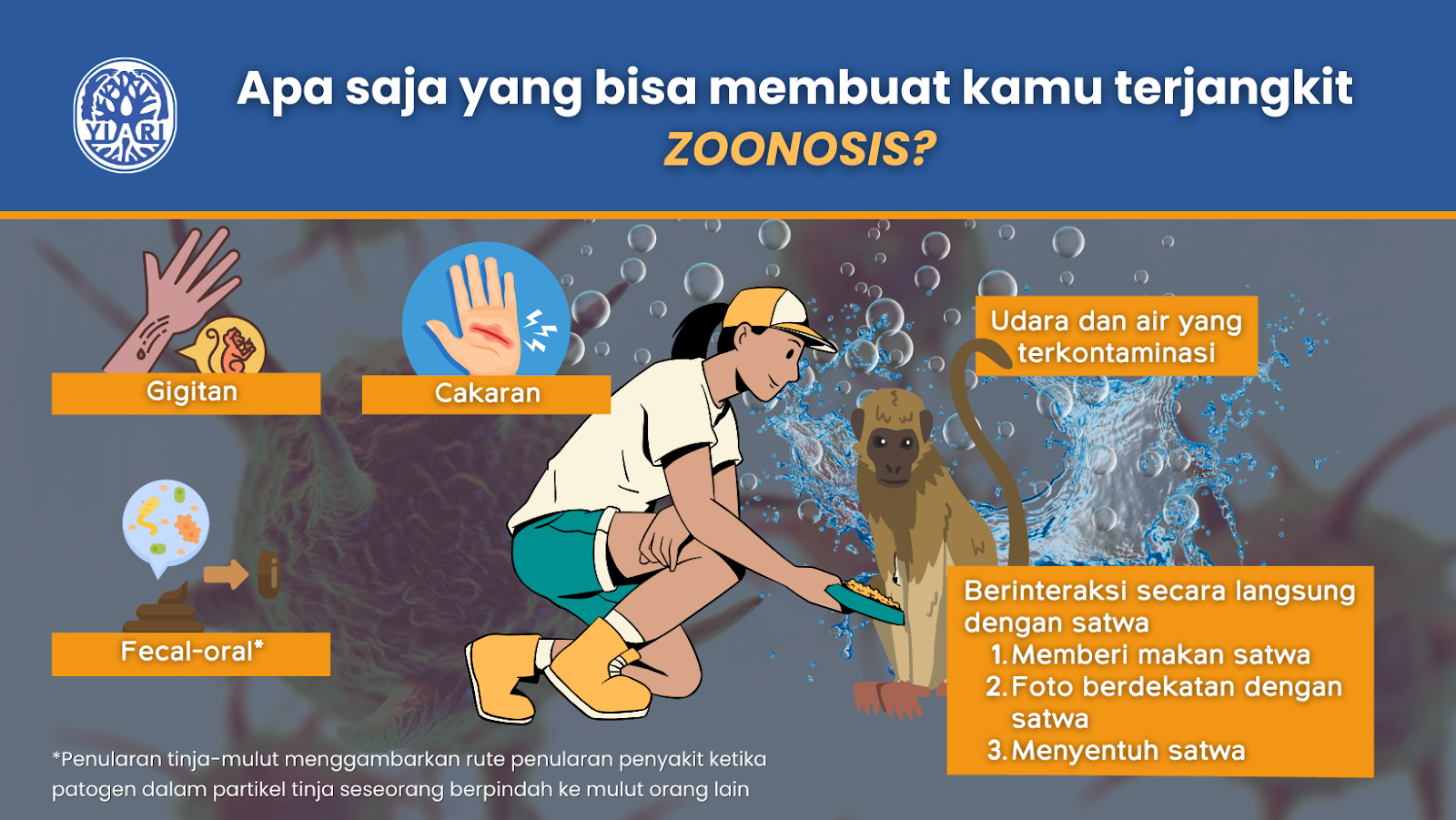
Then, how is it transmitted? There are various ways of bacterial infection from macaca to humans, either directly or indirectly. Get infected directly if you get a bite or scratch from a macaque. While indirect infection is through contaminated water, also food contaminated with Entamoeba SPP cysts. In addition, the main potential for infection is from fecal-oral and direct contact between humans and Non-Human Primates1 (Lastuti 2021). for more details, you can listen to the poster below!
Based on research that has been carried out by Lastuti (2021), in Macaca fascicularis (long-tailed monkey) in Baluran National Park, positive results show that Entamoeba coli. bacteria is a disease agent that infects the digestive tract. In Addition To E.coli are still many disease agents carried by macaques, among others , Plasmodium knowlesi , which is parasitic on macaques in Southeast Asia (Macaca nemestrina and M. fascicularis), which can cause malaria loh Sob. (Jongwutiwes et al. 2011; Millar dan Cox-Singh 2015).
Ohiya, you should know that one of the most significant Zoonoses is tuberculosis. The main causes of this disease are the bacteria Mycobacterium tuberculosis and Mycobacterium bovis (Une and Mori 2007).
So how do we avoid Zoonoses? Buddy # KonservasYIARI can do early prevention in the following ways !
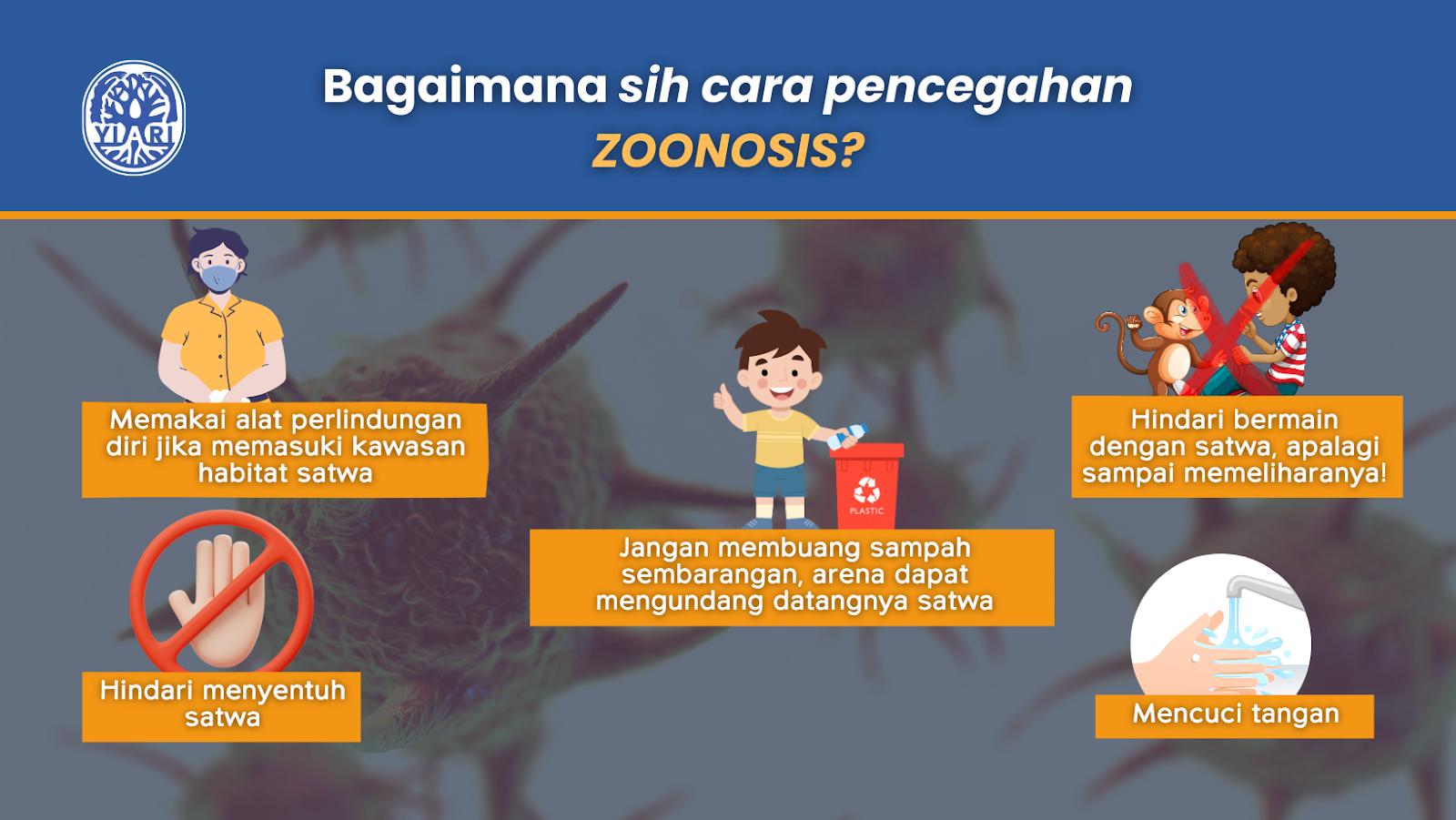
The potential transmission of zoonoses should be watched out for as they can lead to pandemic outbreaks. This can be influenced by an increase in the distribution of human populations and human activities in primate habitats that can trigger negative human-animal interactions.
Be careful and watch out, man! Do not get infected and transmit the disease to primates.
Happy International Makaka Day!
Ria Risyanti
References:
Napier JR, Napier PH. 1985. The Natural History Of The Primates. British Museum: London.
Do you remember Covita? That's right, the baby female orangutan who was rescued from a wildlife maintenance case was protected during the pandemic yesterday. Covita, who was then two years old, was rescued by a joint team of the West Kalimantan BKSDA and YIARI at the end of August 2020. He was kept illegally by a resident in Ensayang Hamlet, Karang Betong Village, Nanga Mahap District, Sekadau Regency. His condition at that time was malnourished and suffering from skin diseases. After being examined at our rescue and Conservation Centre, X-rays revealed a fracture in the right femur of a rifle bullet on Covita's left thigh.
Fortunately, now Covita is free and independent in its natural habitat in Bukit Baka Bukit Raya National Park. How so? What's the story? He's still a baby, can he survive on his own? EITs calm down, Covita is not alone in the forest kok gangs. He was released with his foster mother named Faini.
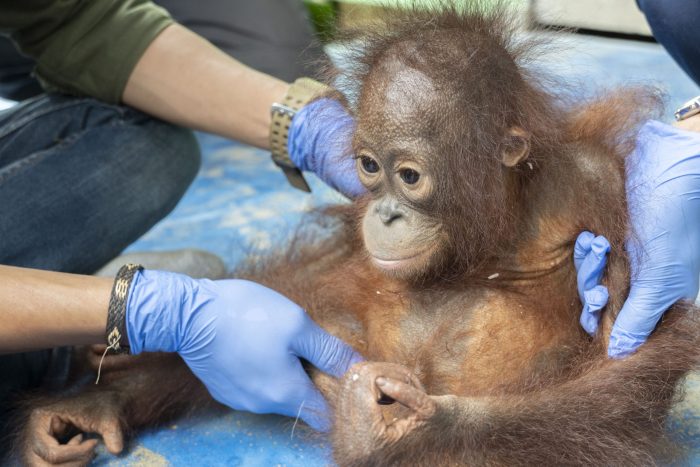
More confused how the story is how Covita can get to have a foster parent of everything? So, after being rescued and receiving intensive care from our medical team at the YIARI Orangutan Rescue and Rehabilitation Center in Ketapang, Covita underwent a period of rehabilitation to restore her survival skills as an orangutan. As long as you know # KonservasYIARI, baby orangutans in nature will stay with their mothers for 6-8 years before they can live independently. It is during their stay with their mother that the orangutans learn to forage, climb, build nests and so on. Covita who had left his mother at such a young age became clueless how to survive as an orangutan in the forest, so the rehabilitation process is needed here.
Fortunately, in the rehabilitation process, Covita met a female orangutan named Faini, who was rescued by a joint team of West Kalimantan BKSDA and YIARI from Randau Jekak Village, Sandai District, Ketapang Regency in December 2015. This Orangutan also suffered an unfortunate fate, losing her mother and becoming a victim of illegal maintenance of protected animals. Faini, who is currently around 10 years old, is very concerned with Covita. In fact they then develop a natural bond as mother and child. Faini is very protective of Covita and vice versa, Covita looks comfortable and becomes more confident when she is with Faini. During the rehabilitation period, the interaction between the two leads to positive things. Thanks to Faini, Covita dared to explore the rehabilitation Forest because Faini was also actively exploring. Covita is not very good at NEST building but with Faini, she is making great progress for an orangutan her age.
When Faini makes a nest for the two of them, Covita always tries to help her foster parents make a nest by collecting twigs and leaves. One of the positive things about Covita is that she is still semi-wild and very rarely makes contact or approaches animal keepers. In fact, he tends to stay away from humans and often makes it difficult for medical teams or animal keepers who want to do an examination. They are also more active in trees. Covita and Paini are very good foraging orangutans. The foraging ability of both orangutans is astounding because their dictionary of forest food species is much more extensive than that of other orangutans. This is why our team did not hesitate to include her name in the list of orangutans that will be released soon.
In addition to the two of them, there are four other orangutans, namely Budi, Tulip, Binaca, and Jamilah who were also released inside the NNBBBR area on June 26, 2023.They all also suffered the unfortunate fate of being victims of illegal rearing of protected wildlife. Budi, who was the only male orangutan in this release, had been kept in a chicken coop for months and fed only sweetened condensed milk until he was severely malnourished until his body swelled up. Budi was rescued from Kubing, Sawah Sempurna Hamlet, Sungai Laur District, Ketapang Regency in December 2014 when he was 1 year old. After a 9-year rehabilitation period, Budi finally gained true freedom in his natural habitat.
Another Orangutan, Tulip, was rescued in April 2012 from illegal rearing by residents of Delta Pawan Sub-District, Ketapang Regency. Today tulips are estimated to be 13 years old. Bianca, a 7-year-old female orangutan, was rescued by the West Kalimantan conservation and natural resources agency (Balai KSDA) in Randau Jungkal Village, Sandai District, Ketapang Regency on October 5, 2016. Jamilah, a 9-year-old female orangutan, was rescued in Sandai, Ketapang Regency in February 2016.
Let us wish them all health always in their homes in Bukit Baka Bukit Raya National Park.
Heribertus Suciadi
Support Indonesia's protected animals by sharing this story on your social media or donate to animals in our rehabilitation center by clicking the link here.