Have you heard about local wisdom such as Ngaben ceremony in Bali or Reog Ponorogo from East Java? Each country has its own unique culture, but Indonesia holds something truly special: local wisdom that is an integral part of the nation's identity.
Behind these various traditions, noble values are hidden that remain alive and relevant, even in the midst of the currents of modernity that continue to move forward. Imagine how Balinese people prepare the Ngaben procession with sincerity, or how the music and magical movements in the Reog Ponorogo show are able to captivate the attention of anyone who witnesses it. This is not just a ritual or entertainment per se—it is a reflection of the wisdom of ancestors passed down from generation to generation.
With more than 300 ethnic groups and 1,340 ethnic groups scattered throughout the archipelago, local wisdom is a clear proof of the richness and diversity of Indonesian culture.
In fact, according to data from the Ministry of Education and culture in 2024, more than 250 cultural traditions have been officially registered as Intangible Cultural Heritage. However, an important question arises: is all this wisdom able to survive in the midst of the rapid influence of foreign cultures and the development of modern technologies?
To answer this question, you need to re-understand what is meant by local wisdom.
Local wisdom is a set of knowledge, values, norms, and practices that grow and develop in a community, based on life experiences and culture that are passed down from generation to generation.
This wisdom serves as a guideline in various aspects of life—whether social, economic, ecological, or spiritual.
According to Sibarani (2012), local wisdom is the original knowledge derived from the culture of the local community and passed down from generation to generation.
Meanwhile, Keraf (2002) emphasized that local wisdom includes all forms of understanding, beliefs, insights, and habits that guide human behavior in maintaining social balance and environmental sustainability.
Local wisdom is not just a cultural heritage, but also part of the identity and character of a community. This wisdom contains noble values that are passed down from generation to generation and remain relevant in modern life.
Here are some characteristics of local wisdom:
Actually, what is local wisdom preserved for? Is it just because it's been there for a long time? The answer is no.
Local wisdom is not just a tradition, but it has real benefits that are very relevant to our lives, both on an individual and social scale. Here are some of the benefits of local wisdom:
Local wisdom teaches how to interact with nature in a balanced and thoughtful way. The values contained in it encourage people to take care of the ecosystem and use natural resources sustainably.
By applying local principles that are oriented towards sustainability, the environment can be preserved and utilized without damaging its balance.

Local wisdom is part of the identity of a community group. He became a marker of cultural uniqueness that distinguishes one community from another.
When local values are valued and maintained, the cultural identity will be stronger and not easily eroded by the changing currents of the Times.
In local wisdom, there are norms that regulate social behavior and create order in society.
Principles such as cooperation, equality, and mutual respect are the basis for building harmonious interpersonal and interwar relationships. This creates social stability and strengthens ties within the community.
Cultural values passed down through generations often manifest themselves in the form of distinctive skills, knowledge, and products of economic value.
When local wisdom is developed productively, it can become a resource that supports people's economic activities, creates jobs, and improves welfare sustainably.
Local wisdom is loaded with moral teachings that shape people's personality and ethics. Through these values, positive attitudes such as respect, responsibility, empathy and honesty are formed.
Internalizing the moral values of local wisdom contributes to creating a society of integrity and noble culture.
From various sources, we can find many types of local wisdom. But in general, we can categorize local wisdom as follows.
Customs are rules and habits that regulate people's lifestyles, ranging from how to dress, social interaction, to the procedure for conducting traditional ceremonies.
For example in Bali, there is a system of temples and penjor used in celebrating religious holidays. These two elements are not only symbols of beauty, but also illustrate the harmony of the relationship between man, nature and the creator.
This kind of tradition teaches the values of peace, togetherness, as well as respect for ancestors.
In various regions, the community is still implementing an agricultural system based on local wisdom that is proven to be environmentally friendly and sustainable.
One example is the Subak system in Bali. This system regulates the equitable distribution of water through cooperation between farmers and is based on the philosophy of Tri Hita Karana, which emphasizes the balance between man, nature and God. This practice is a proof of local wisdom able to create harmony between agriculture and environmental conservation.
Folklore is a medium used by previous societies to convey moral and ethical values to the next generation.
Who has not heard the story of Malin Kundang? This legend teaches the importance of filial piety to parents and serves as a warning of the consequences of ungodly attitudes.
This kind of story remains alive in society and continues to be told orally and in writing, making it an important part in the formation of cultural character.
Traditional arts and crafts are a form of local wisdom that is realized through cultural expressions and hereditary skills.
For example, the craft of batik, weaving, and wood carving developed in various regions such as Yogyakarta, Pekalongan, and Jepara. In Yogyakarta and Pekalongan, batik is not only preserved as a cultural heritage, but also developed into a creative industry that is highly competitive and empowers local communities.
The distinctive batik motifs hold a deep philosophy about life, the environment, and socio-cultural values.
Local wisdom in natural resource management reflects public awareness of the importance of maintaining ecosystem balance.
A vivid example can be found in indigenous villages in Kalimantan, where communities implement sustainable forest management systems. They have customary rules governing when and how forests can be used.
Every region in Indonesia has traditional ceremonies and religious rituals that are part of their cultural identity.
In Bali, for example, the Ngaben ceremony is a tradition of cremation that aims to transport the spirit of the deceased to the afterlife. This ceremony not only shows respect for ancestors, but also teaches the importance of maintaining a balance between man and the universe.
Regional languages and proverbs are important containers to convey the values of local wisdom.
In the Javanese language, there is a proverb 'Adigang, adigung, adiguna', which means that someone who only relies on strength, power, or intelligence without considering moral values will be easily stumbled by his own arrogance. This proverb is a reminder to always be humble and not boast excessively.
Traditional culinary is not just a matter of taste, but also full of cultural meaning and social value. In West Sumatra, for example, rendang is not only known as a delicious food, but also represents the philosophy of life of the Minangkabau people.
Rendang cooking process that requires patience and work together illustrates the value of mutual cooperation, perseverance, and respect for tradition.
Traditional music and dance are forms of cultural expression that are often used in traditional celebrations and religious rituals.
In East Java, Reog Ponorogo dance is an example of how performing arts are used to convey stories of heroism and strength. Apart from being Entertainment, this show also strengthens social relations and strengthens the cultural identity of the region.
After understanding the basic concepts of local wisdom, now is the time to get to know more closely some real examples from various regions in Indonesia.
Although it may not be widely known, the following traditions reflect the noble values, togetherness, and wisdom in the lives of local people.

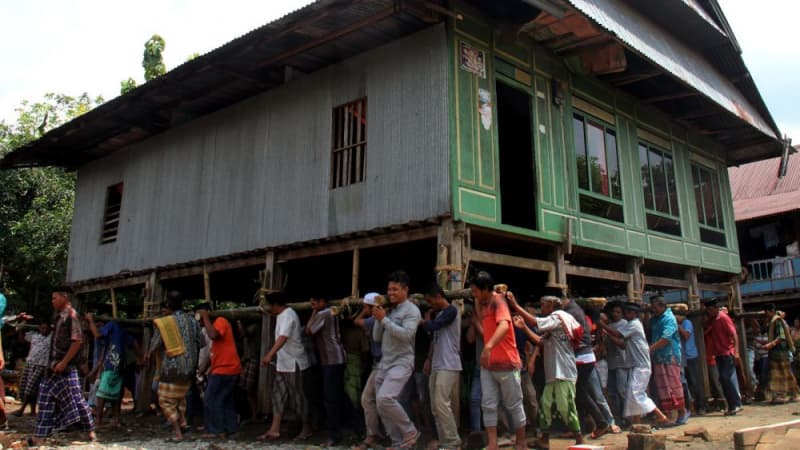
Mappalette Bola is a mutual cooperation tradition originating from the Bugis and Makassar communities in South Sulawesi.
In this tradition, residents join hands to help move a house on stilts from one location to another together.
The process of moving the house is done by lifting the structure of the house manually using bamboo as a buffer. In addition to showing physical cooperation, Mappalette Bola reflects the strong value of solidarity and collective spirit in community life.

Omed-Omedan is a unique tradition carried out by young people in Banjar Kaja, Sesetan Village, Denpasar, right after Nyepi Day.
In this ceremony, two groups of young people face each other, then pull and hug each other, which in practice is sometimes accompanied by a light kiss.
This tradition is believed to be a symbol of rejecting reinforcements as well as a form of supplication for good luck and fertility in the new year. More than just a cultural attraction, Omed-Omedan teaches the importance of togetherness, compassion, and social sustainability in the community.
In Gumiwang Village, Kuningan Regency, West Java, the community implements a system of customary law known as Lembaga Adat Gumiwang.
This system focuses on conflict resolution through deliberation and consensus, without necessarily involving formal legal institutions.
One of the important elements in this tradition is the Ngajayakake ritual, which is a meeting of citizens to discuss and resolve social issues openly. This process emphasizes the importance of mutual respect, listening, and finding solutions together, so as to maintain harmony in community life.

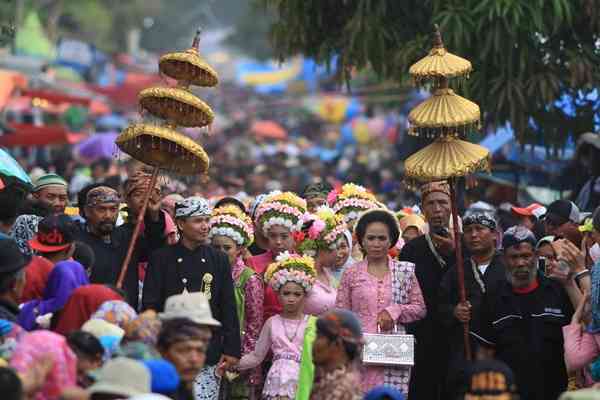
Ngarot ceremony is a typical tradition of the agrarian community in Lelea District, Indramayu Regency, West Java. This tradition is held as a form of gratitude to God for the abundant harvest, as well as a request for blessings for the next growing season.
The ngarot procession is usually carried out before the rice planting period, involving the youth and young people of the village. They wear brightly colored traditional clothing and bring produce such as rice, vegetables, and fruits to be offered at the shrine. The series of events was also enlivened by traditional music performances, regional dances, and a lively procession.
More than just a celebration, the Ngarot ceremony reflects respect for nature and reinforces the value of togetherness and cultural preservation among the younger generation.
Te Aro Naweak Lako is a philosophy of life that comes from the indigenous people in Papua, which literally means 'nature is part of us'. This value contains a deep meaning that the relationship between man and nature is unified and interdependent.
This philosophy is not only a hereditary teaching, but also reflected in the daily life of the Papuan people. In the practice of hunting, farming, and utilizing forest products, they always maintain the balance of nature with full awareness and responsibility.
For example, they only take in moderation and avoid overexploitation, as a form of respect for nature that they consider a relative.
Through Te Aro Naweak Lako, Papuans remind us that caring for nature is not only an obligation, but also a part of cultural identity that is passed down from generation to generation.
Well, buddy # konservasYIARI, it turns out that local wisdom stores so many incredible benefits, right? Not only as a cultural heritage that enriches the identity of the nation, local wisdom can also be a Relevant Life Guide in facing various challenges of modern times.
As the next generation, it is our responsibility to maintain and preserve these noble values. Do not let the advancement of technology and today's lifestyle make us forget or even ashamed of our own cultural roots. In fact, the more we recognize and appreciate local wisdom, the stronger the National Foundation that we build.
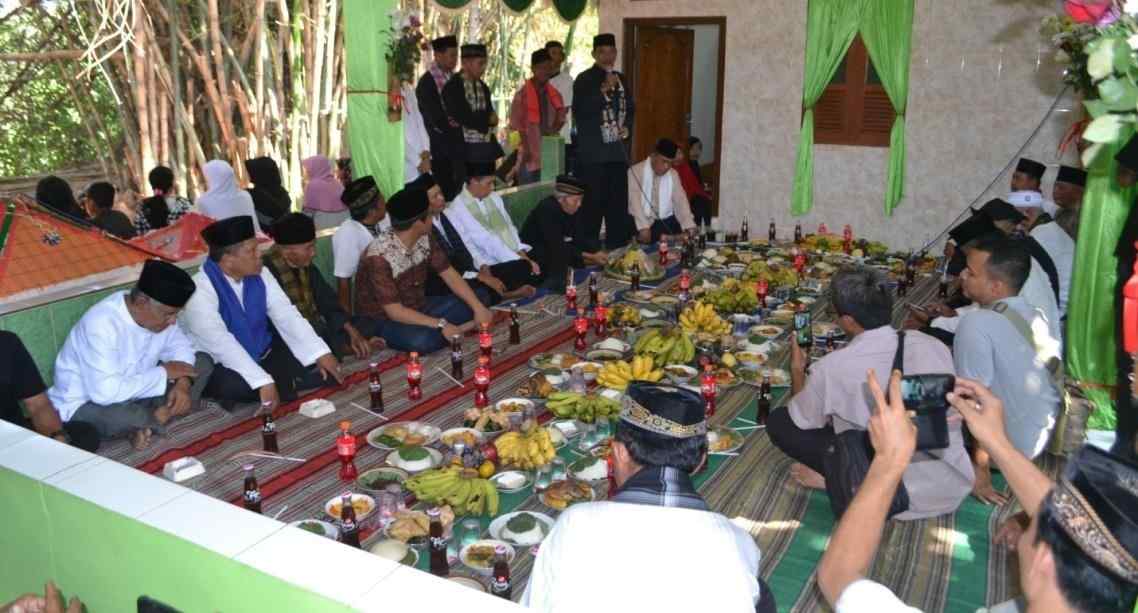
Many people are gathering at the event Salvation / source: Budayaanbetawi
Have you ever imagined that the sunlight that illuminates the Earth every day can be a source of unlimited energy for our lives? Interesting, isn't it?
This is the reason why solar energy—or solar energy-has become increasingly popular in recent years. As one of the renewable energy sources, solar energy offers a sustainable solution to reduce dependence on limited fossil fuels and pollute the environment.
Fortunately, Indonesia has a huge solar energy potential. Based on data from the Ministry of energy and Mineral Resources (ESDM), the potential of solar energy in Indonesia is estimated at 207 gigawatts (GW). However, until the beginning of 2023, the installed capacity of new solar power plants (PLTS) will reach around 322 megawatts (MW), or less than 1% of their total potential.
However, what exactly is solar energy? How does it work, and what are its benefits in everyday life? Let's explore more about solar energy, and how Indonesia is starting to move towards a greener and more sustainable future.
Solar energy is energy produced from solar radiation.
In other words, it is natural energy that can be converted into electricity or heat using a variety of technologies, especially photovoltaic (PV) solar panels and solar heating systems.
According to the International Renewable Energy Agency (IRENA), solar energy is one of the most abundant sources of renewable energy on Earth—far exceeding even today's total global energy needs. This fact shows how much potential can be harnessed from sunlight.
The main technologies in the use of solar energy are divided into two types:
Both technologies play an important role in the transition to clean energy. Both for household and industrial needs, solar energy is one of the most potential solutions to create a more environmentally friendly and sustainable energy system.
As a tropical country that is illuminated by the sun almost all year round, Indonesia has a huge potential for solar energy.
Based on the latest data from the Ministry of energy and Mineral Resources (ESDM) in 2024, the potential for solar energy in Indonesia has reached around 210 gigawatt-peak (GWp), an increase from 207.8 GWp in 2021. Unfortunately, the utilization rate of solar energy in the country is still very low-only about 0.1% of the total available potential.
Although its use is still limited, solar energy continues to show its potential as a clean, sustainable and efficient future energy solution.
So, what are the advantages of solar energy that make it more ogled?
Solar energy is one of the most environmentally friendly energy options. Unlike fossil fuels that generate greenhouse gas emissions and air pollution, the use of solar energy does not generate harmful substances.
By switching to solar energy, you contribute to reducing your carbon footprint, slowing the pace of climate change, and maintaining cleaner air for everyday life. This is a real step towards a greener future.
The sun is an inexhaustible source of energy—at least in the next few billion years. In contrast to fossil energy sources such as coal or petroleum, which are limited and can run out, energy from sunlight continues to be available every day.
Indonesia's geographical prominence in the tropics makes it ideal for harnessing this energy. With abundant sunlight most of the year, solar energy becomes a reliable long-term solution for future electricity needs.
Although the initial cost of installing a solar panel system can seem large, the running and maintenance costs are relatively low. After the system is installed, you only need to perform routine maintenance, such as cleaning the panel surface from dust or dirt.
The absence of fuel costs that have to be purchased regularly also makes solar energy a cost-effective solution in the long term. In a certain time, this initial investment can return through savings on electricity bills.
One of the most significant advantages of solar energy is its ability to be applied in almost all regions, including remote areas that have not been reached by the PLN electricity network.
Solar energy opens up great opportunities for people in rural areas or small islands to gain access to electricity without having to build expensive infrastructure. Thus, solar energy plays an important role in supporting equitable access to energy throughout Indonesia.

As technology develops, the use of solar energy is increasingly widespread and felt in various aspects of life. Here are some of the main benefits of solar energy that you should know:
By using solar energy, you can help reduce dependence on fossil energy sources such as coal, oil, and natural gas. In addition to the limited number, fossil fuel prices tend to be unstable and often influenced by global geopolitical conditions.
Solar energy is becoming a more environmentally friendly solution while offering energy independence. By utilizing abundant sunlight, we can access clean and stable energy in the long run.
The solar energy sector opens up great opportunities in job creation in various fields, from solar panel production, assembly, installation, to system maintenance.
According to the International Renewable Energy Agency (IRENA) report, in 2020 the renewable energy sector globally employed around 12 million people—with photovoltaic (PV) technology being the largest contributor absorbing nearly 4 million workers.
In Indonesia alone, increased investment in solar energy has the potential to drive economic growth through local job creation, especially in the manufacturing and engineering services sectors.
There are still many areas in Indonesia, especially 3T areas (lagging, leading, and outermost), which have not been reached by conventional electricity networks. Solar energy can be an effective solution to provide independent access to electricity in these regions.
With solar panel systems, people in rural areas, remote villages, or small islands can get electricity without waiting for the construction of complex and costly infrastructure. This not only supports equitable distribution of energy, but also improves the quality of life of people in previously non-electrified areas.
One of the advantages of solar energy is its cost stability. Because it does not depend on fuel commodities whose prices fluctuate, solar energy offers stability in electricity prices in the long term.
That way, you don't have to worry about rising electricity tariffs due to fluctuations in the global energy market. This makes solar energy even more attractive, both for households and industrial sectors that require predictability of energy costs.
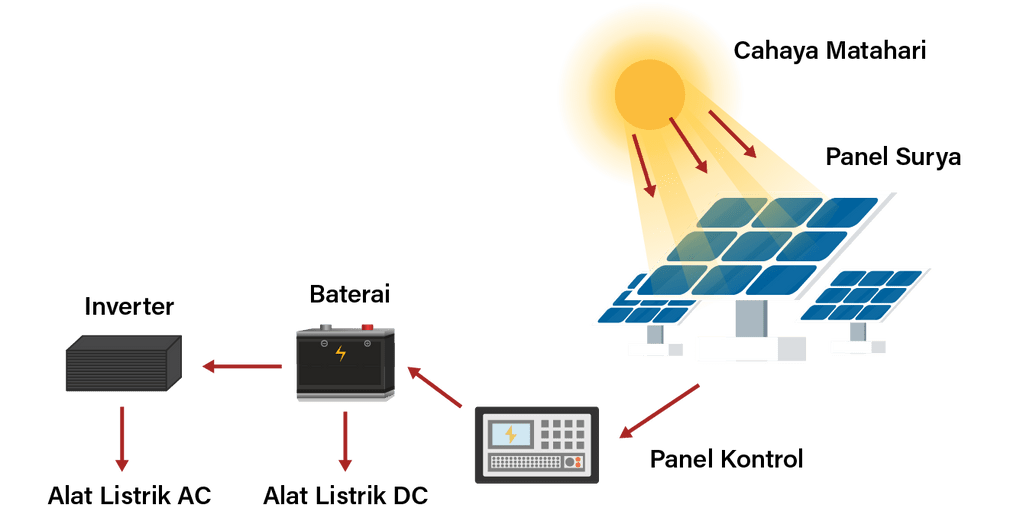
Solar energy works through a sophisticated technological process, capable of converting sunlight into electrical energy. The technology uses a device called a solar panel, which consists of a collection of solar cells or photovoltaic cells designed to capture and convert solar light efficiently.
Each solar cell works on the principle of the photovoltaic effect, which is the process by which light (photons) from the sun stimulate the movement of electrons in a semiconductor material, generating a direct electric current (DC).
In general, solar cells are composed of several main layers:
When sunlight hits the surface of a solar cell, light particles (photons) will hit the atoms in the silicon layer. This collision causes the free electrons to move, creating a flow of electricity. This electrical current is then collected and passed through an inverter circuit to be converted into alternating current (AC) that can be used in homes, offices, or industrial facilities.

Solar energy systems are now increasingly widely known and have been applied in various forms, both at the global and national levels.
In Indonesia itself, the use of solar energy as an alternative source of electricity began to grow rapidly and can be found in everyday life. Here are some examples of popular solar energy applications:
PLTS is one of the most common and large-scale forms of solar energy application. This system uses solar panels to generate electricity which is then channeled to the public grid.
In Indonesia, one of the largest PLTS is located in Kupang, East Nusa Tenggara, with a capacity of up to 5 megawatts (MW). This solar power plant is a clear proof that solar energy can be the backbone of electricity supply in areas with high solar potential.
Rooftop solar panels are increasingly popular among households and commercial buildings. Installation of solar panels on the roof allows the owner of a house or building to generate electricity on their own and reduce monthly bills.
The net metering scheme implemented by PLN also encourages the adoption of this technology, as unused energy can be channeled back to the grid and converted into electricity credits.
This technology utilizes sunlight to heat water used for household and industrial needs.
Solar water heaters are usually installed on roofs and are particularly efficient in sunny climates. This solution not only saves energy, but also reduces the use of electricity from conventional sources.
Solar lights, especially for street lighting, are now increasingly commonly used in various parts of Indonesia, especially in areas that have not been fully covered by the electricity network.
These lights use small panels to absorb solar energy during the day, then store it in batteries for use at night. This technology is very effective for improving security and mobility in remote areas.
Solar energy is no longer just a discourse of the future—it has become a real solution that is constantly evolving and shows great potential for answering global energy challenges. With abundant solar resources throughout the year, Indonesia has tremendous opportunities to lead the transition to clean and sustainable energy.
Although it still faces challenges, such as high initial costs and dependence on weather conditions, technological developments and government policy support pave the way for increased adoption of solar energy in the future.
Now is the time for all of us to start taking a role—whether as individuals, communities, or part of the industry—in supporting the use of solar energy. By doing so, you not only help preserve the environment, but also help create a more independent, clean, and equitable energy future for future generations.
References:
https://seia.org/initiatives/about-solar-energy/
https://www.irena.org/Publications/2024/Jul/Renewable-energy-statistics-2024
https://www.reuters.com/world/asia-pacific/indonesia-plans-boost-renewable-usage-new-electricity-supply-plan-2025-02-11/
Featured image: Panel Surya / Sumber: Freepik
:strip_icc():format(jpeg)/kly-media-production/medias/1551394/original/007855000_1490846764-20170329-Muda-mudi-Rayakan-Tradisi-Omed-omedan-Setelah-Hari-Raya-Nyepi-AP-5.jpg)