In agriculture, fertilizer plays an important role as the main support for plant growth and development. Without an adequate supply of nutrients from fertilizers, plants become vulnerable to pest and disease attacks.
This condition certainly has a direct impact on the quality of crops, both in terms of quantity and quality of fruit or vegetables produced.
In general, there are two types of fertilizers commonly used to fertilize plants, namely chemical fertilizers and organic fertilizers.
Among the two, organic fertilizers are increasingly recommended because they are more environmentally friendly and do not pollute the soil or water sources. One form of organic fertilizer that began to be widely used is liquid organic fertilizer (POC).
What is liquid organic fertilizer? Let's see a more detailed explanation of the following liquid organic fertilizer!
Liquid organic fertilizer (POC) is a liquid fertilizer made from natural ingredients through the process of fermentation or decay. Based on information from the scientific journal of Service and innovation, POC raw materials include organic waste such as plant residues, animal waste, and human waste containing various important nutrients.
POC contains two types of nutrients, namely:
In addition, POC also contains bioactive substances such as vitamins and enzymes produced by the activity of microorganisms during fermentation. These compounds support plant metabolism and increase resistance to environmental stress.
POC is more effectively applied directly to the leaves, stems, and flowers of plants. This is because plant tissues, in particular stomata (pores on the surface of leaves and stems), are able to absorb nutrients in liquid form quickly and efficiently.
POC is very beneficial especially in the initial growth phase of the plant and during the transition from the vegetative to the generative phase, in which the plant begins to flower or bear fruit. In addition to being a source of nutrients, POC also acts as a natural growth stimulant that helps accelerate the development of buds and flowers.

Liquid organic fertilizer (POC) has a number of properties that resemble solid organic fertilizers, despite their different physical forms. POC is liquid because it has gone through the process of fermentation or decomposition of organic matter naturally. The main characteristics of liquid organic fertilizers are:
As the name suggests, liquid organic fertilizer has a physical form in the form of a liquid. This form facilitates the process of absorption of nutrients by plants through leaves and roots.
Liquid organic fertilizer (POC) has a number of properties that resemble solid organic fertilizers, despite their different physical forms. POC is liquid because it has gone through the process of fermentation or decomposition of organic matter naturally. The main characteristics of liquid organic fertilizers are:
As the name suggests, liquid organic fertilizer has a physical form in the form of a liquid. This form facilitates the process of absorption of nutrients by plants through leaves and roots.
POC contains various important nutrients needed by plants, both macro nutrients such as nitrogen (N), phosphorus (P), and potassium (K), as well as micro nutrients such as iron (Fe), manganese (Mn), and zinc (Zn).
This complete nutrient content helps support optimal plant growth at all phases of life.
One of the main advantages of POC is its ease of application. This fertilizer can be sprayed directly onto plant parts such as leaves, stems, and flowers, or sprayed onto growing media such as soil or compost.
Thanks to the liquid form, POC is absorbed by plants faster than solid fertilizers. Nutrients can enter directly through the stomata on the leaves or through the roots, so that their effect on plant growth is felt faster.
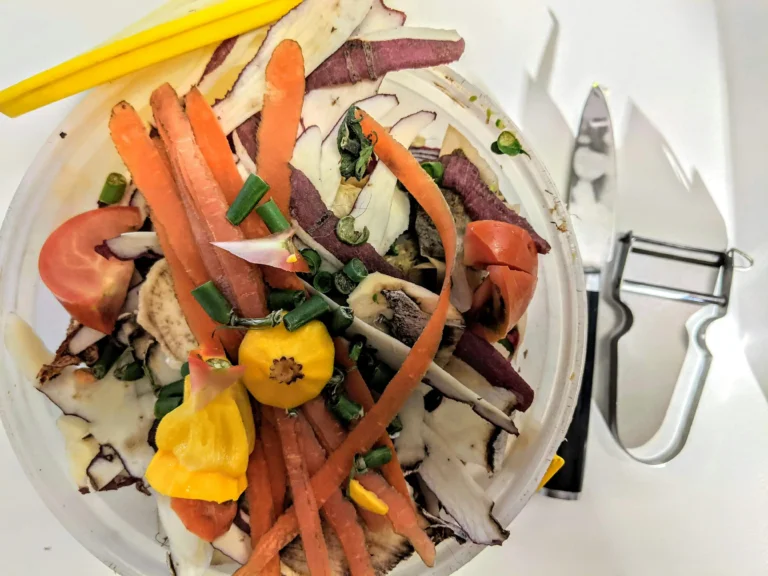
POC can be made from various household and agricultural organic waste, such as vegetable scraps, fruit peels, animal waste, to kitchen waste. This makes POC a cost-effective fertilizer option while supporting sustainable organic waste management.
Because it comes from natural organic ingredients, liquid organic fertilizers are able to improve soil structure, increase organic matter content, and strengthen water binding in the soil.
This makes the soil looser and more fertile, thus supporting optimal plant root growth.
A well-fermented POC does not emit a fetid odor. On the contrary, this fertilizer has a characteristic and unobtrusive aroma of fermentation, so it is more convenient to use it, especially in domestic or urban environments.
In addition to serving as a source of nutrients, POC also contains live microorganisms such as bacteria and fungi. These microbes play a role in breaking down organic matter in the soil and suppressing the growth of pathogens that cause plant diseases naturally.
Quality POCs generally have a neutral to slightly acidic pH (around pH 6-7), which is ideal for most types of plants. In terms of appearance, this fertilizer is Brown to blackish brown, indicating an optimal fermentation process and nutrient-rich raw materials.
The regular use of POC has been proven to improve the quality of agricultural products. Plants produce fresher fruits and vegetables, more natural flavors, and better shelf life because they are obtained from balanced and natural nutrients.

In terms of use, liquid organic fertilizer (POC) offers higher convenience than solid organic fertilizer. The application is simply sprayed or watered, without the need for complex tillage processes.
However, POC is not ideal for being the main fertilizer in the long term, due to its nutritional properties, which are more easily washed out by rainwater or soil erosion.
Referring to the Journal of scientific and technological services (Polytechnic of Industrial Chemical Technology Medan), the following advantages and disadvantages of POC:
Low viability of microorganisms: microorganisms contained in POC have low viability, especially if storage is not carried out correctly.
Limited microorganism population: the number of microbes in the POC is often below 10 ° cfu/ml, which is low enough to significantly improve the soil in a short time.
Relatively low nutrient content: the main nutrients in POC generally come from added ingredients such as urea or NPK, rather than purely from organic fermentation.
Non-durable: POC has a short shelf life, usually less than one year, and is not suitable for long-term storage without special treatment.
Potential for contamination and odor: if not fermented optimally, POC is at risk of producing gases and pungent odors, and is susceptible to being contaminated with pathogens.
Not yet ideal for industrial scale: POC production is often still manual and not immediately ready for mass scale use without standardization.

Liquid organic fertilizer (POC) can be made independently by utilizing organic materials that are easily found around the environment.
The manufacturing process involves fermentation using effective microorganisms such as EM4, which contains Lactobacillus bacteria, Actinomycetes, Streptomyces, yeast, and photosynthetic bacteria. These microorganisms play an important role in accelerating the decomposition of organic matter into nutrients that are ready to be absorbed by plants.
Here's an example of a simple recipe for making POC:
The process of creating a POC cannot be done instantly. It takes at least two weeks of fermentation to produce fertilizer with good quality. The results of this POC can be used directly on plants, either sprayed on the leaves or sprinkled on the ground.
Liquid organic fertilizer is an environmentally friendly and economical solution to increase agricultural productivity. Both for household scale and wider agricultural land, POC offers ease of manufacture and use.
By taking advantage of the available organic waste, anyone can make their own fertilizer at home. Now, there is no reason to let plants grow without nutrients—even if only in the yard.
Featured image: Ilustrasi pupuk organik cair (pixabay.com/PollyDot)